There is something almost mythical about a massive whitetail rack. But behind every towering set of antlers is a precise, repeatable biological process driven by science. Understanding how elite antlers develop is not just for biologists; it is the foundation of effective deer management, habitat planning, and long-term herd success.
The Fastest Growing Bone in Nature
Whitetail antlers are one of the most extraordinary growth phenomena in the animal kingdom. Unlike horns, antlers are shed and completely regrown every year, making them the fastest-growing bone tissue among mammals.
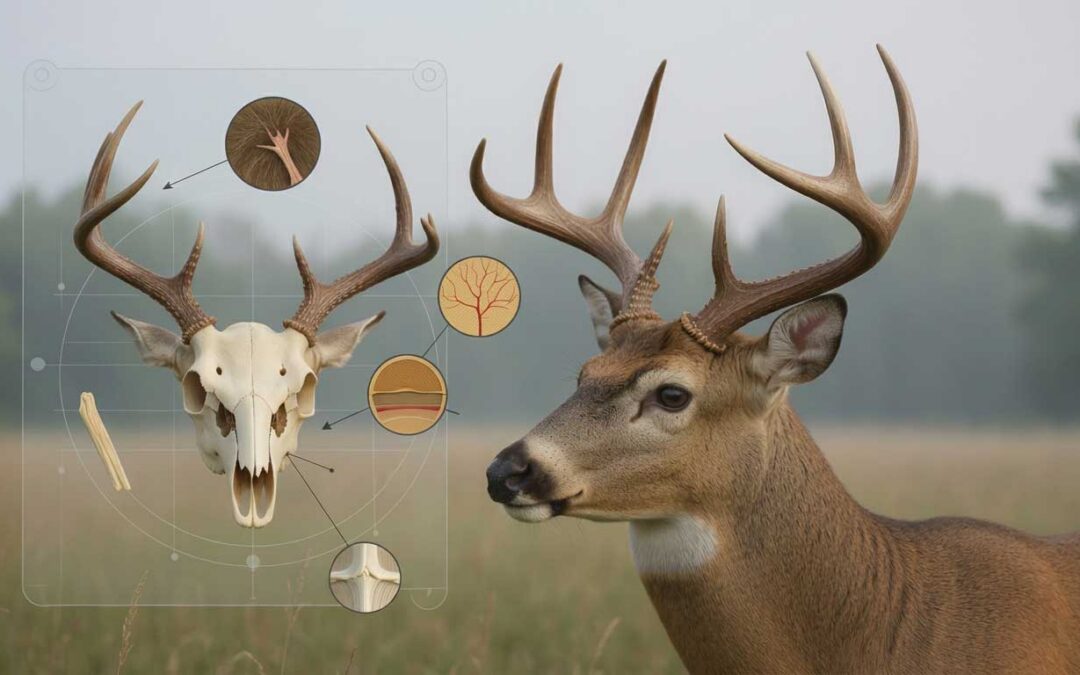
Growth begins at the pedicles, permanent structures on a buck’s skull, and rapidly expands under a living, nutrient-rich skin known as velvet. This velvet is packed with blood vessels that deliver oxygen, protein, and minerals, fueling explosive growth through spring and summer.
At peak development, antlers transition from soft cartilage into hardened bone through a process called mineralization, eventually becoming dense, calcified structures used during the rut.
The “Big Three” Factors: Age, Nutrition, Genetics
When it comes to producing world-class antlers, science consistently points to three primary drivers:
1. Age: The Foundation of Size – Antler size increases dramatically as a buck matures. Most whitetails don’t reach their full antler potential until 4.5 to 6.5 years of age, when body growth stabilizes and more energy can be devoted to antler development.
Young bucks simply lack the physiological capacity to produce massive racks no matter how good the habitat is.
2. Nutrition: The Game-Changer – If there is one factor land managers can actively control, it is nutrition, and it matters enormously.
Research shows that deer fed higher-protein diets produce significantly larger antlers. The takeaway is simple:
“You feed them good; you grow them big.” Key nutritional components include:
- Protein (critical during spring/summer growth)
- Calcium & phosphorus (for mineralization)
- Energy-rich forage (supports overall health)
Interestingly, much of the calcium used in antlers is temporarily pulled from the deer’s own skeleton and later replenished through diet.
3. Genetics: The Ceiling – Genetics determine a buck’s maximum potential – frame size, tine length, and overall structure. Studies show many antler traits are moderately to highly heritable.
However, genetics alone don’t guarantee trophy antlers. Even superior genetics cannot be expressed without proper nutrition and age. In fact, in wild populations, managing genetics is far less controllable than habitat and herd age structure.
Hormones: The Invisible Trigger
Antler growth is orchestrated by hormones, particularly testosterone and insulin-like growth factors. During spring, low testosterone allows antlers to grow rapidly in velvet. As fall approaches, testosterone rises, triggering:
- Velvet shedding.
- Hardening of antlers.
- Preparation for the rut.
This hormonal cycle repeats annually, tightly synchronized with daylight (photoperiod).
Antlers Are a “Luxury Item”
From a biological standpoint, antlers are not essential for survival, they are a luxury. A buck will prioritize survival, body maintenance, and reproduction.
Only when those needs are met does it allocate resources to antler growth. That is why environmental stress such as poor soil, drought, and overcrowding can dramatically limit antler size even in genetically strong herds.
Habitat: Where Science Meets Strategy
World-class antlers are built from the ground up, literally. Soil quality influences plant nutrition, which in turn affects deer health. Top-producing regions typically feature:
- Fertile soils (high mineral content).
- Diverse native forage.
- Agricultural crops or managed food plots.
- Balanced herd densities.
Without quality habitat, even the best genetics and age structure will not reach their full potential.
The Timeline of a Trophy Rack
A typical annual antler cycle looks like this:
- Late Winter: Antlers shed.
- Spring: Rapid velvet growth begins.
- Summer: Peak growth and mineralization.
- Early Fall: Velvet shed; antlers harden.
- Fall/Winter: Rut and eventual casting.
This cycle repeats every year, offering a new opportunity for growth and improvement.
Final Thoughts: Building a Better Buck
Growing world-class whitetails is not about luck, it’s about aligning biology with management. The formula is clear:
- Let bucks age.
- Provide high-quality nutrition.
- Support strong genetic diversity.
- Maintain healthy habitat conditions.
When these elements come together, the results are not just bigger antlers, they are healthier herds and more sustainable ecosystems.
Behind every trophy rack is a story written in biology, shaped by the land, and refined over time. To learn more about why Oak Creek Ranch is the gold standard for trophy whitetail bucks, visit https://oakcreekwhitetailranch.com.